

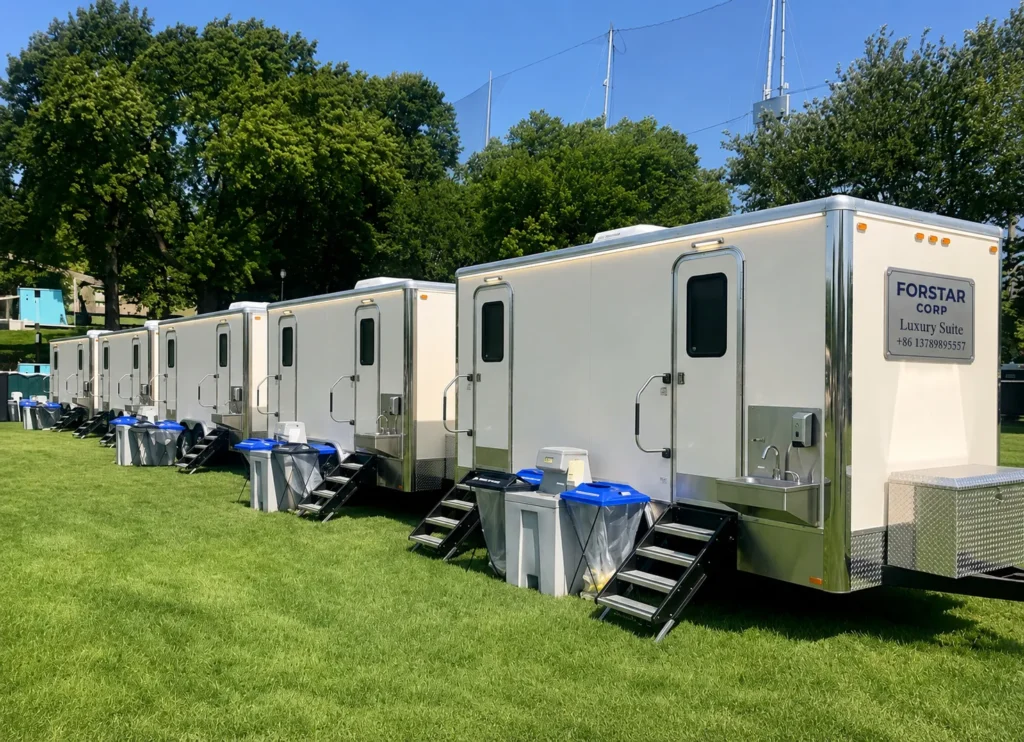
When a company hosts an event, guests rarely remember the catering order or the exact agenda timing, but they do remember the small things that felt off. A restroom that is cramped, hot, or poorly lit is one of the most common of those small things. For event planners and marketing teams, a luxury restroom trailer has become a practical way to close that gap, especially when the venue has limited permanent facilities or none at all.
This guide walks through where restroom trailers fit in the corporate calendar, how to size and place one, and which details matter most once guests actually walk in.
Why Corporate Events Call for More Than Standard Portable Toilets
Corporate guests arrive with different expectations than festival crowds. They are clients, partners, investors, and employees, and many of them are dressed for business or formal occasions. A single-cabin plastic unit with no running water simply does not match the tone of a product launch or an executive reception.
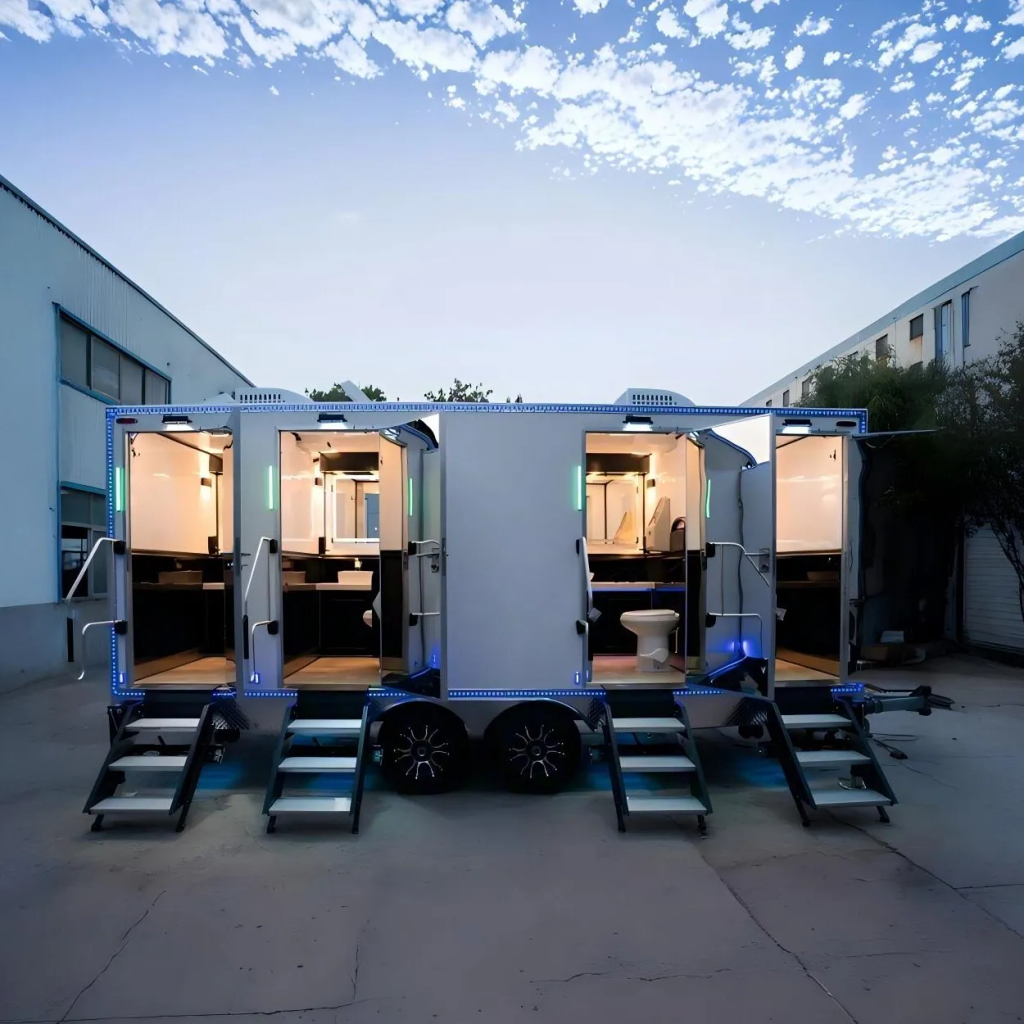
A restroom trailer works more like a small, self-contained building on wheels. It typically offers flushing toilets, a handwashing area with running water, interior lighting, climate control in many models, and finished surfaces that can be cleaned quickly between visitors. The result is an environment that supports the event instead of quietly undermining it.
Event Types Where a Restroom Trailer Makes the Most Sense
Product launches and brand activations are the clearest fit. Guests are being asked to form an impression of your company, and every touchpoint counts, including the one most people forget to plan. Annual galas and award dinners are similar, because formal dress and long evenings make comfort and presentation more important.
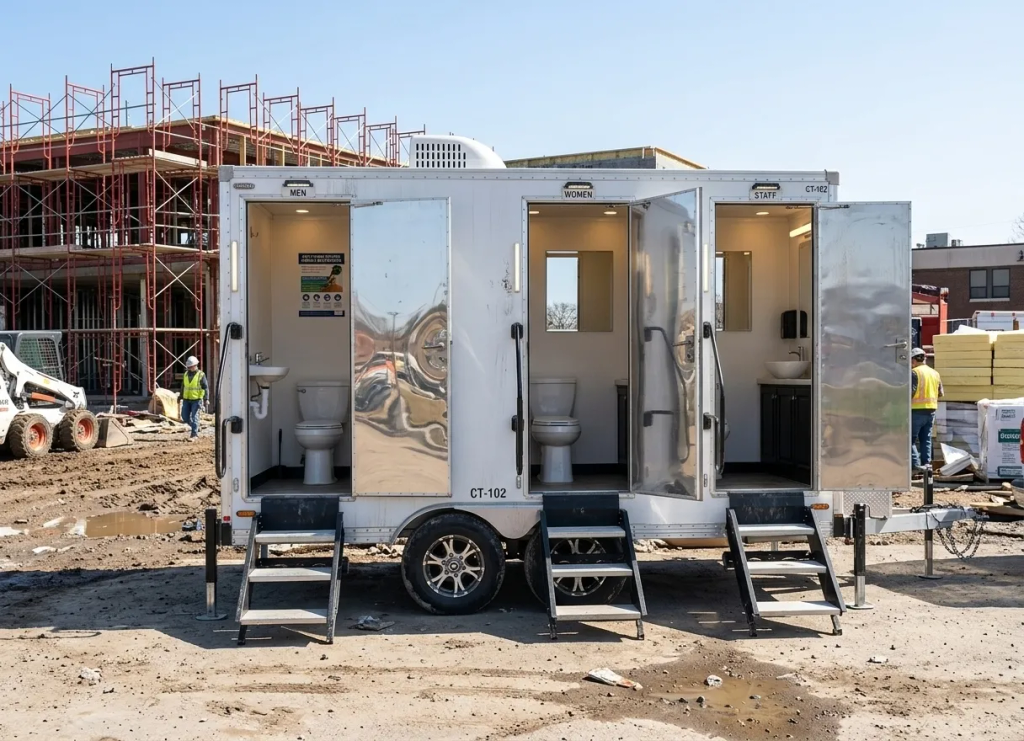
Outdoor corporate retreats, team-building days, and groundbreaking ceremonies are the other major category. These are often held on farmland, construction sites, resort grounds, or open lots where permanent plumbing is far away. A trailer brings the facilities to the location rather than forcing the event to adapt to the site.
Trade show lots, sales conferences with outdoor sessions, and company anniversary parties also use trailers regularly, particularly when attendance spikes at certain moments, such as during breaks.
Choosing the Right Number of Stalls
Capacity is where many first-time renters go wrong. A restroom that looks generous on paper can still create queues if everyone uses it at the same break. As a general planning approach, event organizers consider total guest count, event length, whether alcohol is served, and how the schedule concentrates traffic. Events with long cocktail hours or scheduled breaks need more capacity than events where guests drift in and out.
For small meetings, seminars, or executive gatherings, a compact one or two stall trailer is usually enough and is easy to position near the venue. For larger launches, galas, and retreats, multi-stall trailers or a pairing of two units reduce waiting and keep the flow of the event intact. If you are unsure, ask your supplier to review your guest list and schedule, and always check local requirements, since sanitation rules for events vary by city, county, and state.
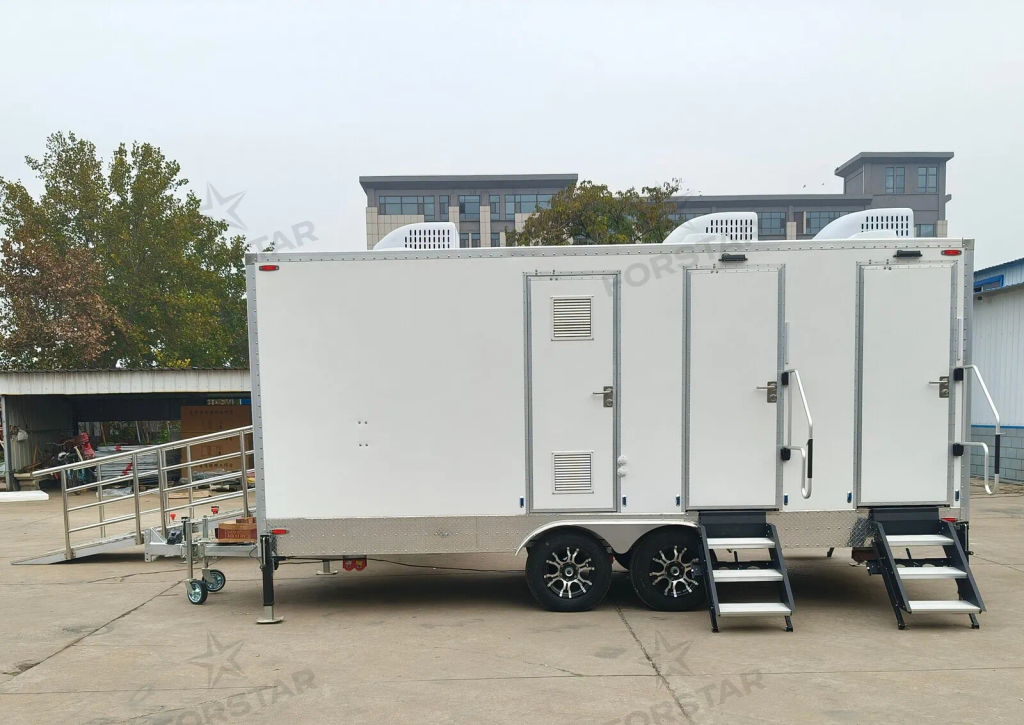
Accessibility should be part of this decision from the start. If your guest list includes people with mobility needs, an ADA-compliant restroom trailer, or an equivalent accessible unit where you operate, is the responsible choice and often a requirement for public or large-scale events.
Location and Layout Planning
Placement affects both guest experience and logistics. The trailer should be easy to find and reasonably close to the main activity area, but not so close that foot traffic, noise, or service access interferes with the event itself. A short, well-lit walkway is ideal, particularly for evening events.
The ground matters more than most planners expect. Trailers need a level, stable surface, and wet or soft ground may require extra preparation. Delivery access is another detail to confirm early, because a unit that cannot be towed into position is a problem on the day. You also need to think about water and power. Many trailers can run on onboard water tanks and a standard power connection or generator, but you should confirm requirements for the specific model well before the event date.
Clear signage helps, and so does simple landscaping, such as screens, planters, or lighting, which blends the trailer into the event design.
Details That Guests Actually Notice
Once the basics are handled, the quality of the interior makes the difference between an acceptable restroom and a memorable one. Guests notice cleanliness, temperature, lighting, and scent first. Mirrors, vanity areas, quality soap, and fresh paper goods all signal care. Music at low volume or tasteful interior finishes can add to the feeling, but cleanliness and comfort remain the priority.
Consider having an attendant on site for longer events. Someone who restocks supplies, wipes surfaces, and keeps an eye on the unit ensures the restroom looks as good at the end of the night as it did at the start. For high-profile events, this single decision often matters more than any upgrade to the trailer itself.
Turning the Restroom Into a Brand Opportunity
Because restroom trailers are visible and used by nearly every guest, they offer a quiet branding opportunity. Some companies add a logo or event graphics to the exterior, while others use small, tasteful signage inside. The goal is not to turn the restroom into an advertisement, but to make the experience feel consistent with the rest of the event.
Keep branding subtle. A clean, well-presented trailer with a discreet logo reflects attention to detail far better than heavy promotional messaging.
Cost Versus Value
A luxury restroom trailer costs more than a row of standard portable toilets, and it would be misleading to suggest otherwise. The question for corporate events is whether the added cost supports the purpose of the event. If the goal is to host clients, impress partners, or give employees a comfortable experience, the restroom is part of the hospitality budget, not a separate expense.
When comparing options, look at what is included, such as delivery, setup, servicing during the event, attendant support, and pickup, rather than comparing headline prices alone.
Questions to Ask Before You Book
Before you commit to a supplier, ask about stall options for your guest count, accessible unit availability, water and power requirements, delivery and placement needs, servicing during the event, and how far in advance you should book for peak seasons. Clear answers to these questions usually tell you more about a supplier than photos do.
Final Thoughts
Restrooms rarely appear in event briefs, yet they shape how comfortable and well organized an event feels. For product launches, galas, and outdoor company gatherings, a well-chosen restroom trailer is a simple way to protect the guest experience and reflect the standard your brand wants to project.
If you are planning a corporate event and want help matching a trailer to your guest count, venue, and schedule, send us the details through our inquiry page and we will recommend a configuration that fits.