

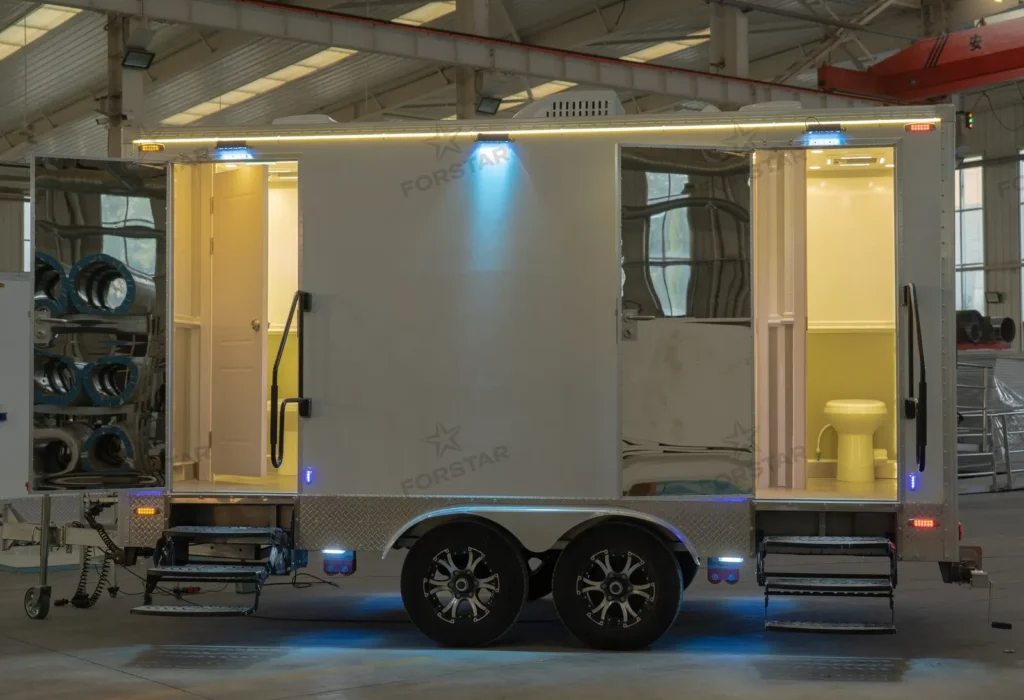
Event planners and project managers tend to ask the same question once the guest list is settled: how early do we need to act, and how long will the trailer take to get running on the day? The honest answer is that there are really two clocks ticking. One covers everything that happens before the trailer arrives, and the other covers what happens once it pulls onto your site. Mixing the two is the most common reason schedules slip.、
This guide separates them so you can plan with confidence.
The Two Timelines You Need to Plan For
The first timeline is lead time, which is how far in advance you should reserve or order a unit. The second is on-site setup time, which is how long it takes from the moment the trailer arrives to the moment guests can use it. Lead time is measured in days or weeks, while on-site setup is usually measured in hours.
If you are renting for a specific event, your main concern is booking early enough and preparing the site properly. If you are buying a unit, especially a customized one, the production schedule becomes the dominant factor. Always confirm both with your supplier in writing.
How Far in Advance Should You Book?
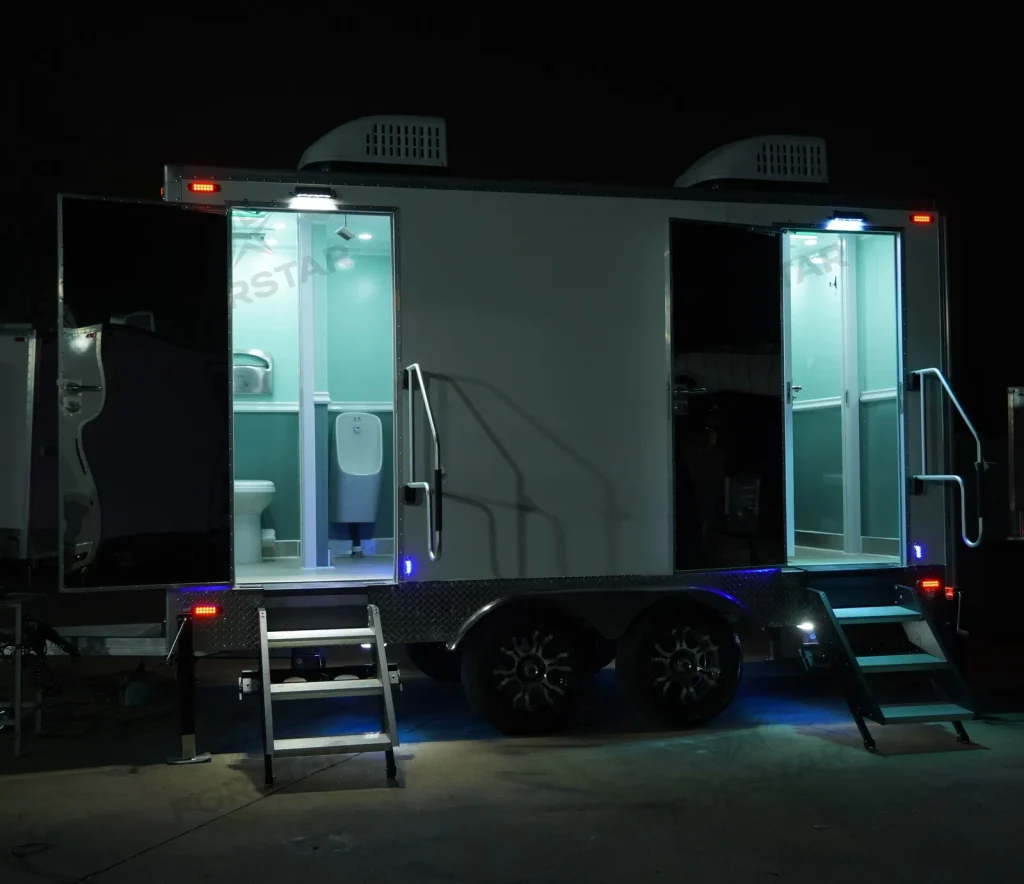
For rentals, availability is shaped by season and event type. Spring and fall are busy for weddings and outdoor festivals, and summer is busy for large public events. Corporate calendars add their own peaks around product launches and year-end galas. As a general rule, the larger the unit, the earlier you should reserve it, because multi-stall and ADA-accessible trailers are fewer in number and often booked first.
For smaller or off-peak events, shorter notice is sometimes possible, but it is never a safe assumption. Planners who lock in the trailer as soon as the date and venue are confirmed rarely regret it.
If you are purchasing, standard configurations generally move faster than custom builds. Changes to the layout, finishes, fixtures, or branding add design and production steps, so the more you customize, the earlier the conversation should begin. Ask your supplier for a specific production and delivery window rather than a vague estimate.
Delivery: Getting the Trailer to Your Site
Delivery time depends on distance, route, and scheduling. A local delivery can often be handled within a single day, while longer distances require more planning. Weather, road restrictions, and venue access rules can also affect timing, so it helps to arrange delivery for the day before a major event rather than the morning of.
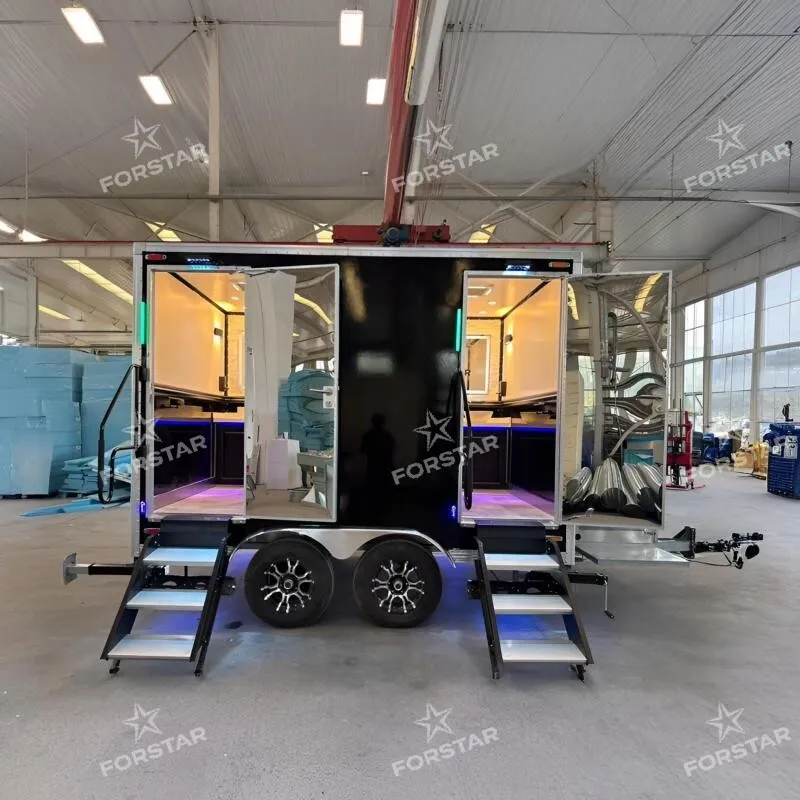
Before the trailer arrives, share the exact address, gate or access details, and any restrictions with the delivery team. Narrow entrances, low-hanging branches, tight turns, and soft shoulders are common issues that are easy to solve in advance and frustrating to discover on the day.
Site Preparation: The Step People Underestimate
A restroom trailer needs level, stable ground and enough clearance to be towed into position and stabilized. Pavement, packed gravel, and firm lots are straightforward. Grass, dirt, and sloped areas take more thought, particularly after rain, because soft ground can make positioning difficult and may require extra preparation.
Site preparation can range from almost nothing on a hard, level surface to a few hours of work on uneven or soft terrain. Walk the location with your supplier or send clear photos ahead of time. It is the single most effective way to prevent delays.
You should also plan for utilities at this stage. Many luxury restroom trailers can operate from onboard fresh water and waste tanks, which suits remote locations, while longer events may benefit from a water hookup and a standard power connection or generator. Confirm the exact requirements for the model you are using, including electrical needs for air conditioning or heating.
On-Site Setup: What Actually Happens and How Long It Takes
For a towable trailer, setup is faster than most people expect. In many cases the process takes roughly one to two hours once the trailer is on site, although simple placements can be quicker and complex sites can take longer.
The sequence usually begins with positioning the trailer in the agreed spot and unhitching it. The crew then levels the unit and lowers stabilizer jacks so it sits firmly. Next come the connections: water, power, and waste, depending on the setup you have chosen. After that, the team fills fresh water tanks if needed, powers up lighting, ventilation, and climate control, and checks that toilets, sinks, and fixtures work properly.
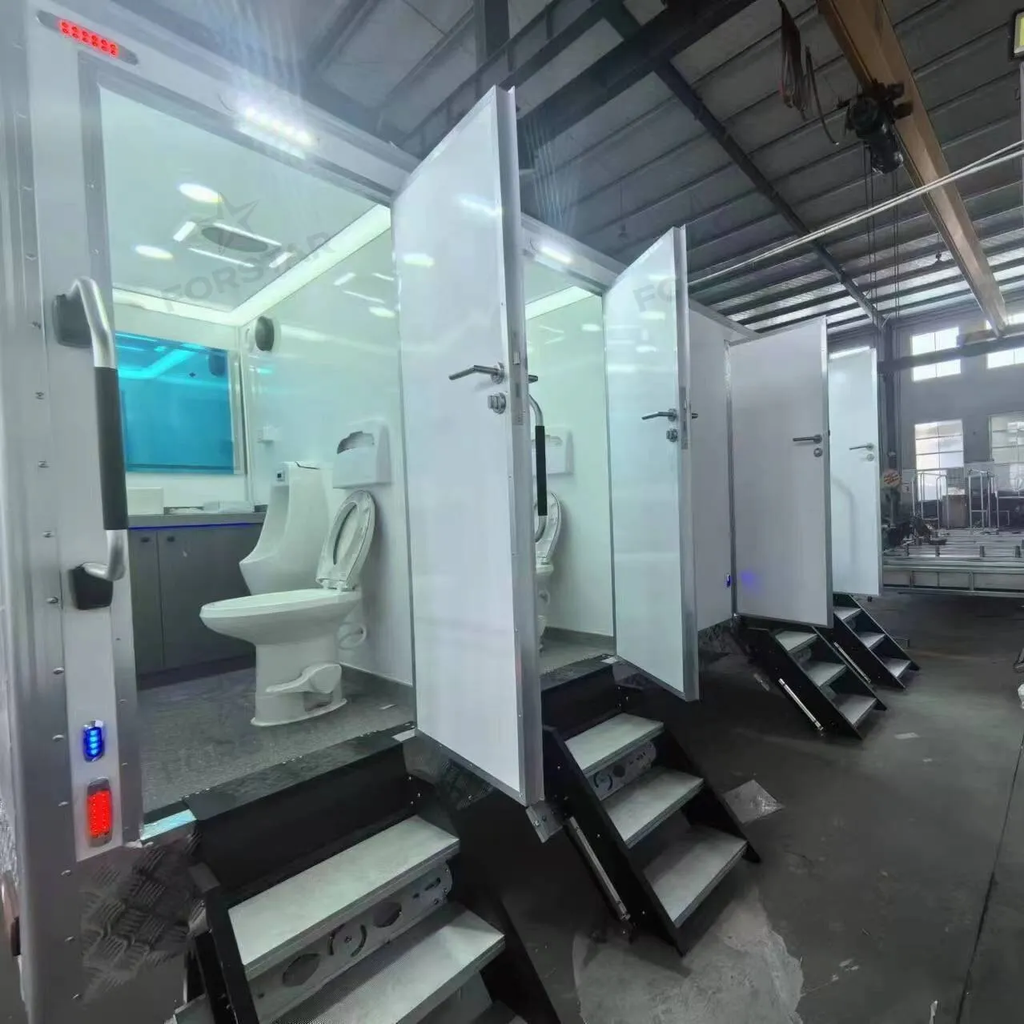
The final step is a walkthrough and inspection. The interior is cleaned, supplies are stocked, and the door locks, lighting, and handwashing stations are tested. A trailer that has been checked this way is ready for guests, not just parked in place.
What Can Make Setup Take Longer
Most delays trace back to a short list of causes. Access problems are the most frequent, such as a gate that is too narrow or a path that cannot take the trailer’s length. Ground conditions come next, especially wet or uneven terrain. Utility mismatches also cause trouble, for example when the power source on site does not match what the trailer needs. Finally, last-minute changes to the placement can force the crew to reposition and re-level the unit.
None of these are difficult to avoid with a short pre-event call and a site photo or two.
A Simple Planning Timeline
Working backward from your event date, a sensible approach looks like this. Reserve the trailer as soon as the date and venue are confirmed. A few weeks before the event, confirm the placement, access route, and utility details with your supplier. In the final days, reconfirm the delivery window and make sure someone on site can meet the crew. On the day itself, allow time for delivery, setup, and testing to finish well before guests arrive, ideally with a comfortable buffer rather than a tight margin.
Planning your setup this way turns a potential last-minute scramble into a routine step.
Final Thoughts
Setting up a luxury restroom trailer is quick on the day, but the groundwork behind it is what makes that speed possible. Book early, prepare the site, confirm your utilities, and give the crew a clear path in. Do those four things and the trailer will be ready long before your first guest needs it.
If you have an upcoming event or project and want to talk through timing, send us your date, location, and expected headcount through our contact page, and we will help you map out a schedule that works.